Touch as a Form of Listening
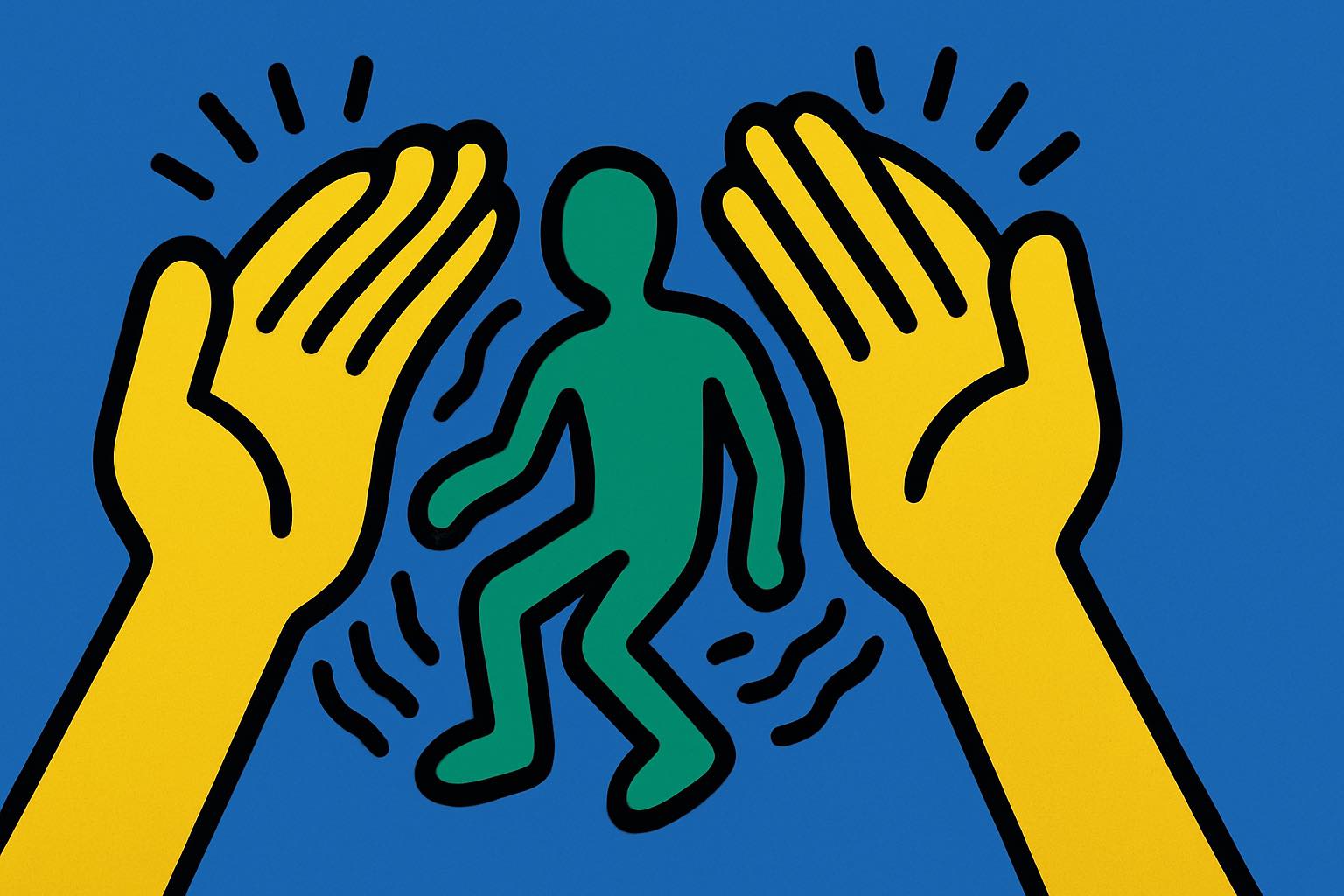
In therapeutic contexts, touch is often described in terms of application: pressure, placement, technique, and intention. Yet this framing quietly misses the most essential function of touch, not as an act of doing, but as an act of listening.
Just as words in a therapy session are not something to be corrected or managed but something to be heard, the body, too, speaks continuously. Through tone, rhythm, temperature, resistance, micro-movement, and stillness, the organism communicates its state. Touch, when practiced with maturity and safety, is not imposed upon this communication; it is shaped by it.
In this sense, touch belongs to the same epistemological family as therapeutic listening. It requires restraint, curiosity, and an ability to tolerate uncertainty.
A skilled therapist does not rush to interpret a client’s words. They listen for what is said, what is avoided, what repeats, what collapses, what trembles at the edges of speech. Touch demands the same discipline. The hands must wait long enough for the organism to reveal itself—not as an object to be adjusted, but as a self-organising system with its own intelligence.
Across somatic disciplines—from neurophysiology to trauma therapy, from osteopathy to developmental psychology, there is a growing consensus that regulation does not occur through force, but through attunement. The nervous system reorganises itself when it is met accurately.
This principle applies equally to touch. When contact is made without listening, even the lightest touch can become intrusive. Conversely, when touch is guided by deep sensory listening, even firm contact can feel safe, coherent, and supportive.
The organism continuously signals what it can tolerate and what it cannot. It signals readiness, withdrawal, activation, and completion. These signals are rarely dramatic. More often, they are subtle: a softening of breath, a minute shift in tissue tone, a pause before movement resumes. To perceive these cues requires a quality of attention that cannot be rushed or manufactured.
In this way, the body leads. The practitioner follows.
The Sacredness of Touch Is Not Mystical – It Is Ethical
Touch is often described as “sacred,” a word that risks slipping into abstraction. Yet its sacredness does not lie in spirituality or symbolism. It lies in responsibility.
Touch bypasses language. It accesses systems shaped long before conscious memory—early attachment patterns, autonomic reflexes, procedural memory. Because of this, touch carries power. And power, in therapeutic settings, demands humility.
To touch without listening is to override the organism’s sovereignty. To touch while listening is to enter into a dialogue that respects the body’s pacing and priorities.
This is why skilled touch often looks deceptively simple. There is no dramatic intervention, no visible manipulation. What is happening is internal: the practitioner is tracking regulation, waiting for coherence, allowing the nervous system to complete cycles that were once interrupted.
This kind of touch does not fix. It accompanies.
In verbal psychotherapy, we understand that advice offered too early can disrupt a client’s process. Interpretation imposed prematurely can shut down insight. Touch follows the same rules.
A body that is not listened to will adapt, but adaptation is not healing. Healing requires that the organism feels met, not managed.
Just as a therapist listens not only to content but to cadence, hesitation, and silence, the hands must listen beyond surface anatomy. They must perceive relational tone: is the tissue inviting contact or tolerating it? Is the system orienting toward or away from connection?
When touch becomes listening, the session becomes a conversation—not between practitioner and client alone, but between conscious intention and the organism’s deeper intelligence.
Technique has its place. Training matters. Anatomy matters. But technique without listening is merely choreography.
The most meaningful therapeutic touch emerges when the practitioner relinquishes the need to do something and instead commits to being with. This does not imply passivity. It implies precision—the precision of timing, of restraint, of response.
Listening touch recognises that the organism knows how to move toward balance when conditions are right. The practitioner’s role is not to lead the process, but to support its emergence.
Touch, at its most refined, is not an intervention. It is a relationship.
Like listening in therapy, it requires patience, humility, and a willingness to be changed by what one encounters. When we truly listen with our hands, the organism does not need to be instructed. It shows us the way.
The work, then, is not to perfect our touch, but to deepen our capacity to listen.
Fiona Leibowitz ©
If this resonates with you - join Fiona for a 20-minute connection call
Stay connected with news and updates!
Join our mailing list to receive the latest news and updates from our team.
Don't worry, your information will not be shared.
We hate SPAM. We will never sell your information, for any reason.
